Fall Exterior Cleaning Checklist for Seattle Homeowners
There is a window in fall — roughly from mid-October through mid-November in the Seattle area — when the conditions align for the most effective exterior maintenance of the year. The summer growth has slowed. The heavy rains have not fully set in. Surfaces are easier to treat, and anything you clean now stays clean through winter rather than being immediately re-colonized by wet-season growth.
Miss this window and the work gets harder, the results get shorter, and the winter moisture goes to work on surfaces you planned to clean but did not.
This is the checklist we walk through with homeowners every fall — what to do, in what order, and why the timing matters for each one.
Why fall timing matters more here than anywhere else
Most exterior maintenance guides are written for climates where you clean in spring when the weather breaks and that is about it. The Pacific Northwest does not work that way.
Moss and algae grow year-round here — including through winter. By February, any organic debris left on a surface in October has had three full wet months to generate new growth. The roof valleys hold decaying leaves and debris that seed the next moss colony. Gutters blocked from fall leaves overflow in the first real storm of November. A deck that was not cleaned before the wet season goes into winter already damp and already discoloring.
The other reason fall timing matters: treatment products need dwell time to work, and they work best when applied to a surface that is not already waterlogged. A moss killer applied to a bone-dry surface in October does its job. The same product applied to a surface that has been rained on for three months is diluted and slower to penetrate.
This is the window. Let’s work through it from top to bottom.
1. Roof treatment and moss removal
When to do it: Before the first sustained November rains. October is ideal.
Why fall specifically: Moss grows most actively in cool, damp conditions — exactly what winter brings. Treatment applied now kills the existing colony and prevents new establishment through the wet season, giving you the full two to three year window before regrowth. Treatment applied in spring is working against the tide of a season that just finished establishing growth.
What it involves: A soft wash roof treatment — chemistry applied at low pressure, never high-pressure washing which strips granules from asphalt shingles and voids most manufacturer warranties. The treatment kills moss, algae, and lichen at the root and spore level. What remains rinses away over the following rainfall events, so the roof looks its best by December.
What we look for while up there: Ridge cap mortar condition. Flashing that may have shifted. Valley debris concentration. Shingles with visible granule loss. This is not a roofing inspection — but a methodical walk across your roof surface means we see things that matter before they become winter problems.
Roof type matters: Metal roofs need different chemistry than asphalt. Composite and tile have their own considerations. We match the method to the material — same low-pressure discipline, different product choices.
If you have Douglas fir, big-leaf maple, or alder branches overhanging the roof, the timing question is about leaves, not just moss. Wait until the major leaf drop is done — otherwise you are cleaning debris that is still falling. For most Seattle properties, that is late October. For heavy canopy lots in Woodinville or Issaquah, it may be closer to mid-November.
2. Gutters
When to do it: After the major leaf drop — usually late October to mid-November.
Why it cannot wait: A blocked gutter does not just overflow in a storm. It holds standing water against your fascia board and soffit, which leads to rot. It backs water under the roof edge. It overflows down your siding rather than through the downspout, creating the algae streaking and staining that house wash calls are made to fix. Blocked gutters are one of the most direct causes of fascia and siding damage on Seattle homes.
What it involves: Interior clearing of leaves, debris, and biological buildup. Flushing downspouts to confirm clear flow. Exterior gutter whitening if the outside of the gutters has the black algae streaking that is common on homes with heavy tree coverage.
Bundle with roof: Gutter clearing and roof treatment on the same visit is the standard combination — if we are on the roof and in the gutters anyway, bundling the two is the most efficient way to do both.
3. House wash — siding and exterior surfaces
When to do it: Any dry day in October or November. Soft wash dries within a few hours of application.
Why fall specifically: Summer leaves a film of pollen, dust, and traffic grime on siding. Fall adds the spore-settling that accompanies the first rains. Cleaning siding now removes the existing buildup before winter moisture gives it three months to establish as mildew and algae. A house washed in October goes into winter clean. A house that is not washed in fall will typically show visible algae streaking by March.
What it involves: A house wash is a soft wash of the full exterior — vinyl, Hardie, painted wood, stucco, or brick — using low pressure and cleaning chemistry. High pressure damages virtually every siding material except masonry; soft washing is what actually removes biological growth rather than just rinsing the surface.
Surfaces that often get overlooked:
- Covered areas under overhangs and eaves — shaded and damp, grow mildew faster than exposed siding
- North-facing walls — the ones that never get direct sun
- The first three feet of siding above a deck or fence — splash zone from rain off wood surfaces

4. Decks and fences
When to do it: October, before the sustained rains. Decks need a full dry day or two to absorb a sealant properly.
Why fall specifically: Wood decks and fences go into their worst months — constant moisture, freeze-thaw cycles, organic debris — and what state they enter winter in directly affects how they come out. A deck that is clean and sealed in October has a protective layer against the wet season. One that is not gets three months of moisture cycling into the exposed grain, which leads to graying, splintering, and eventual structural issues.
For decks: Wood power wash at low pressure, with the grain, removes moss, algae, and grey oxidation. We follow with a brightener that restores the wood’s warm color and opens the grain for stain or sealant absorption. The deck needs 24–48 hours of dry weather after cleaning before anything is applied.
For fences: Fence cleaning follows the same low-pressure approach. Cedar and pressure-treated fences can be brightened and stained in the same visit or in a follow-up. Fence staining in fall gives the stain the winter to cure properly before the following summer. Fence brightening alone restores color and cleans, without the full stain commitment.
Most deck stains and sealants require the surface and air temperature to be above 50°F during application and for the following 24 hours. In Seattle, that window closes around mid-November most years. If staining the deck is on the list, do not push it past late October. Cleaning can happen in colder conditions; application cannot.
5. Driveways, sidewalks, and hardscape
When to do it: Any dry spell in fall — this is the most flexible item on the list.
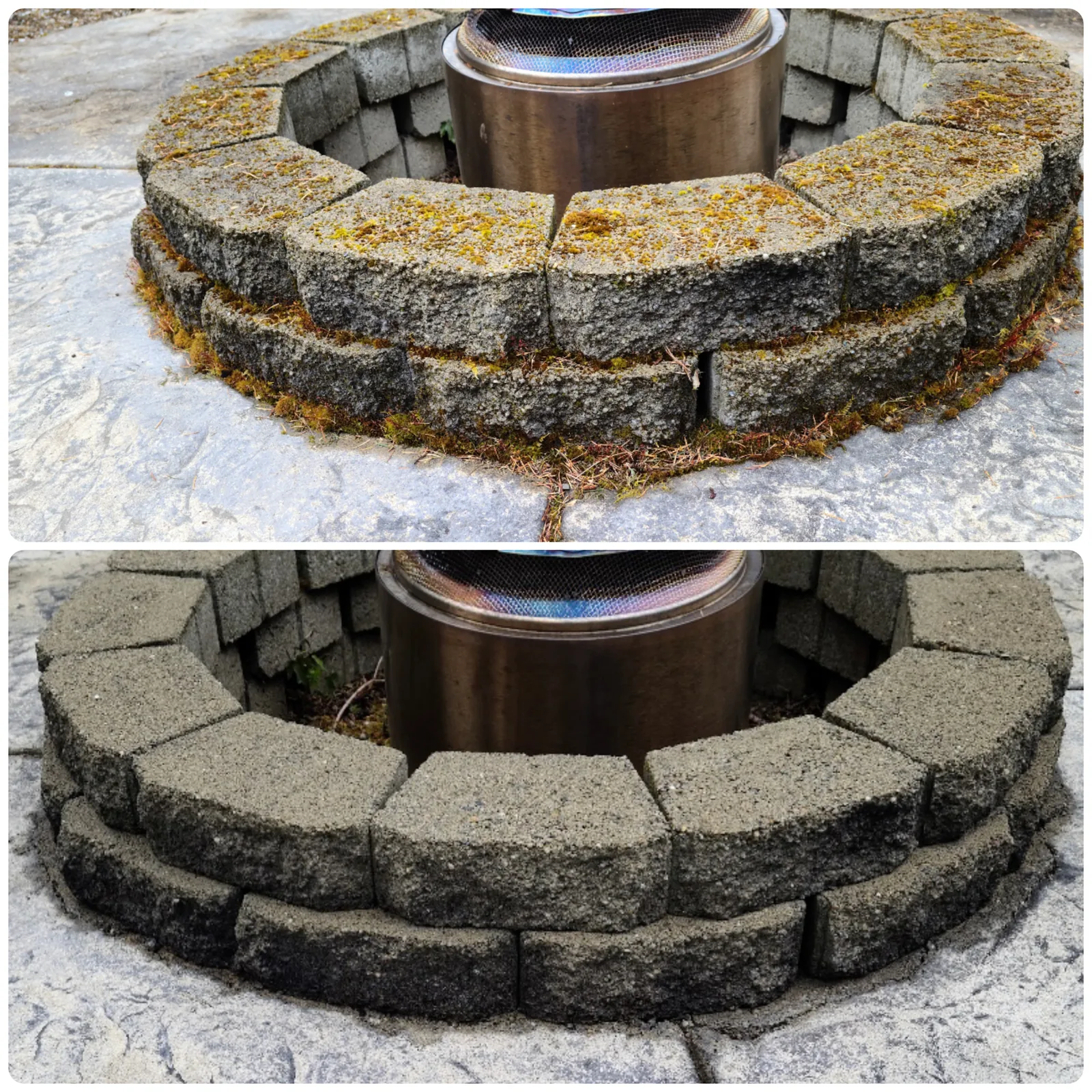
Why fall specifically: Moss on a concrete driveway is a slip hazard in winter rain. The wet season embeds the moss root system deeper into the concrete, making it harder to remove in spring. Fall cleaning removes the current growth, and the pressure washing prep also gives you the opportunity to apply a concrete sealer that keeps moss from establishing as easily through winter.
What it involves: Driveway and sidewalk pressure washing — high pressure is appropriate for concrete and masonry (unlike siding and roofing). Pavers and flagstone are cleaned at reduced pressure to protect the sand jointing. We treat any biological growth, rinse clean, and can seal if the concrete is dry enough to absorb.
What to do with organic debris: Leaves and debris blown off the driveway still end up against the foundation or in planting beds. We clear the whole area rather than just cleaning the concrete, so the job is actually done and not just moved.
6. Foundations and low surfaces
When to do it: Alongside the driveway or house wash — lowest priority on the list, but worth including if it is in poor condition.
Why it matters: Algae and mildew growing on a concrete foundation are growing right next to where your siding and rim joist meet the concrete. Moisture at the foundation line is where water finds its way in. Keeping the foundation surface clean also makes it easier to notice cracks or shifting before they develop into something significant.
Putting it together: the full property in one visit
The order above is not arbitrary — it is top to bottom, which is the only correct sequence. Moss treatment products and biological debris fall off a roof. Gutter clearing sends debris down the downspout and sometimes along the siding. Siding washing sends runoff down the walls. Working in the wrong order means cleaning a driveway and then immediately dirtying it with roof runoff.
Done properly, a full fall exterior maintenance clean takes one visit, one crew, and one morning — roof, gutters, siding, decks or fences, driveway. The bundled cost is significantly less than booking each surface separately, and the top-to-bottom sequence means nothing gets re-dirtied.
If coordinating the fall clean and a spring clean and deciding which surfaces need attention each year sounds like more administrative overhead than you want, our Annual Power Plan handles the scheduling. We set the calendar, check in before each visit, and keep your priority surfaces on a cycle that makes sense for your specific property and tree situation.
The fall exterior cleaning checklist
Here is the whole list at a glance:
| Surface | Timing | What is involved | DIY or pro? |
|---|---|---|---|
| Roof treatment | Before Nov rains | Soft wash moss/algae treatment, low pressure only | Pro recommended |
| Gutters | After leaf drop | Interior clear, downspout flush, exterior whitening | DIY possible (single-story) |
| House wash / siding | October–November | Soft wash full exterior, all elevations | Pro for multi-story |
| Deck cleaning | October, dry days | Low-pressure wash, brightener, prep for sealant | DIY possible |
| Deck sealing | Before mid-Nov | Stain or sealant application after cleaning | DIY possible if experienced |
| Fence cleaning | October | Low pressure, brightener for wood | DIY possible |
| Fence staining | October | Penetrating stain after cleaning and drying | DIY possible |
| Driveway / sidewalk | Flexible | High-pressure concrete wash, paver cleaning | DIY possible |
| Foundation | Alongside house wash | Low-pressure scrub, biological treatment | DIY possible |
The “DIY possible” entries come with the usual Pacific Northwest caveats: it usually takes significantly longer than expected, most consumer pressure washers are not powerful enough for concrete or large areas, and rental equipment requires knowing the right pressure for each surface to avoid damage.
For anything involving height — roof, second-story siding, tall fences — the ladder and harness time alone makes professional service the right call for most homeowners.
Booking the fall clean before the window closes
We are booking fall exterior cleaning visits through late November for most Seattle and Eastside properties. The window for deck sealing closes first — mid-November in most years. Roof treatment and house wash extend a little longer. Driveway and gutter work can run into December on dry days.
Request a free quote online or call (425) 298-7041 for a same-day estimate. We serve Seattle, Bellevue, Kirkland, Redmond, Sammamish, Bothell, Kenmore, Woodinville, Issaquah, Shoreline, Mercer Island, and surrounding communities.
Ready to Transform Your Property?
Get a free, no-obligation power washing quote from Seattle's #1 rated team.