Fence Brightening
in Seattle & the Eastside
The grey on a weathered cedar fence is reversed by chemistry, not scrubbing. Wood brightening restores the warm tone underneath and preps the surface for a finish that actually bonds.
What Makes Cedar and Wood Fences Go Grey
When cedar, pine, or pressure-treated wood weathers to grey, the cause is UV exposure. Ultraviolet light breaks down the lignin — the natural binder that holds wood fibers together — in the outer surface cells. The result is a layer of oxidized, dead wood fiber that sits on top of the living wood underneath. That surface is flat, grey, and highly absorbent.
Washing removes the algae, moss, and dirt sitting on the grey surface, but it does not reverse the oxidation itself. A pressure-washed grey fence is a clean grey fence. The warm tone that made it look like cedar when it was installed is still there, underneath the oxidized layer — but washing alone does not expose it.
That is what brightening does. A wood brightener applied after cleaning is a mild acid that reacts chemically with the oxidized surface layer, reducing it and revealing the warm tone below. It also neutralises the alkaline cleaner used in washing — which matters because alkaline residue left in wood raises the grain and prevents any finish applied afterward from bonding properly.
Brightening is particularly effective on cedar, redwood, and Douglas fir — the most common fence species in the Pacific Northwest — because the natural oils and tannins in those species respond well to the chemistry. It is the step that separates a genuinely restored fence from a simply washed one.
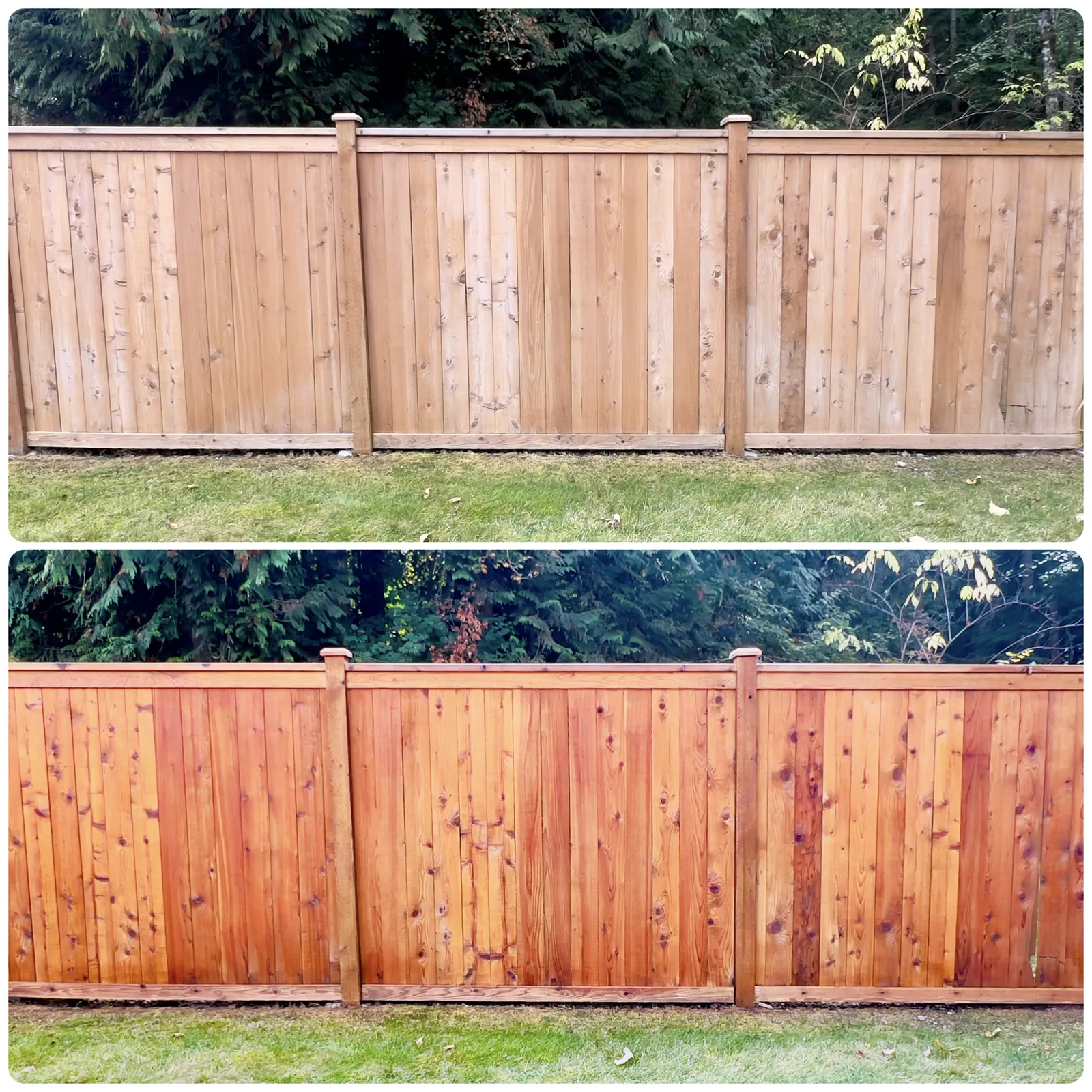
The Fence Brightening Process
Brightening is always the second step — cleaning has to come first for it to work properly.
Clean the Fence First
Brightening applied over moss, algae, or dirt treats the contamination, not the wood. The fence is washed first with a wood-appropriate cleaner to remove all growth, staining, and surface debris.
Rinse and Inspect
Thorough rinse after cleaning, then an inspection. We look at the depth of greying, any tannin bleed around fasteners, and what the boards are made of — it all affects the expected result.
Apply Wood Brightener
A mild acid brightener is applied evenly across all boards. It is left to dwell and react — the chemical process takes time and cannot be rushed. We watch for the color response as it works.
Final Rinse
Everything is rinsed down. The fence is now clean, pH-balanced, and open-grained — ready to accept a finish or to simply be left at its restored color.
Dry Before Staining
If staining or sealing follows, the fence must dry thoroughly first. We will tell you exactly how long to wait based on the wood, the weather, and the finish planned.
Wood Species We Brighten
Brightening works on any bare wood fence — results vary by species:
Cedar
The most common PNW fence species. Responds excellently to brightening — the warm reddish-brown tone comes back strongly even on heavily weathered boards.
Douglas Fir
Common in pressure-treated fence boards. Brightening restores the natural golden tone and neutralises the alkaline preservative treatment.
Redwood
High tannin content makes redwood particularly prone to tannin bleed around fasteners. Brightening addresses both the greying and the staining.
Pine
Brightens well, though pine is more absorbent than cedar and benefits particularly from sealing afterward to hold the result.
Weathered Boards (Any Species)
Severely greyed boards that have never been treated can usually be restored significantly with brightening — often more than the homeowner expects.
Results That Last
Color Restoration
The warm natural tone of cedar and fir is still in the wood — brightening chemically reveals it rather than painting over the grey.
Better Water Resistance
pH-balanced, brightened wood sheds water more effectively than alkaline, grey surface wood and is less hospitable to algae regrowth.
Better Stain Adhesion
Surface Assessment
Brightening reveals the true condition of the wood underneath — including boards that have gone too far and are worth flagging before money is spent finishing them.
Bundled with Fence Staining
Brightening and staining are most cost-effective when done together on the same visit. The fence goes from grey to fully restored in one job.
Licensed & Fully Insured
Licensed contractor, full liability coverage, and experienced wood restoration crews.
I had given up on my cedar fence and was about to get quotes for replacement. After brightening and staining, it looks better than when it was installed. I am genuinely stunned.— Patricia M., Woodinville, WA · Fence Brightening & Staining
Fence Brightening Cost in Seattle
Fence brightening is priced by linear footage and the degree of weathering. Severely greyed or heavily tannin-stained fences require more product and dwell time. We price brightening most affordably when bundled with fence cleaning and staining on the same visit.
Linear Footage
The length of fence to be brightened sets the base scope.
Weathering Severity
Deep greying and heavy tannin staining require more brightener and longer dwell time.
Bundle with Staining
Clean, brighten, and stain on one visit is the best value and the best result. We price the full restoration package accordingly.
The fastest way to an accurate price is a free quote. We respond within 24 hours — often same day.
Frequently Asked Questions
What does wood brightener actually do?
A wood brightener is a mild acid — typically oxalic acid — that does two things. First, it neutralises the alkaline cleaner used in the washing step, which is important because alkaline residue left in the wood raises the grain and prevents finishes from bonding properly. Second, it reacts with the oxidized surface layer of the wood and reduces it, restoring the original warm tone. The chemical reaction is what reverses greying, not the scrubbing.
My fence is grey — will brightening restore the original color?
Usually yes, to a significant degree. The grey you see on weathered cedar or pine is oxidized surface fiber — UV has broken down the lignin in the outer wood cells. Brightening reverses much of that oxidation and restores the warm tone underneath. How far it comes back depends on how long the wood has been grey and whether the grey is UV damage, mineral staining, or something else. We can tell you what to expect once we see the fence.
Is brightening necessary if I am not planning to stain?
Not strictly, but there are good reasons to do it even without a finishing plan. Brightened wood is pH-neutral rather than alkaline, which means it sheds water more easily and is less hospitable to algae regrowth. It also looks significantly better — a brightened fence has the warm appearance of real wood rather than the flat grey of a weathered board. Whether that is worth it without staining is a judgment call, but most people who see the result opt for it.
Can you brighten a fence that has already been stained?
No — brightening is applied to bare wood, before any finish. It is part of the preparation sequence: clean, brighten, dry, then stain or seal. A fence with an existing stain needs the stain stripped first, which is a different scope of work.
How long does wood stay bright after brightening?
Without a finish, brightened wood will begin to grey again as it re-oxidizes — typically over 6–12 months in direct sun and exposed weather. With a stain or sealer applied after brightening, the finish slows re-oxidation and locks in the color significantly longer. Brightening without finishing is worth doing for the cleaning preparation value alone, but brightening before staining gets you a result that lasts.
Have a question we didn't answer? Call (425) 298-7041or submit a quote request — we respond within 24 hours.
Deck & Fence Cleaning Across Seattle & the Eastside
Cedar fences across the Pacific Northwest grey faster in certain conditions — heavy shade from trees or the house itself accelerates both biological growth and UV degradation on south-facing boards. Fences in Woodinville, Sammamish, and Issaquah that back onto greenbelt or tree lines see the worst combination of shade and moisture. Open, sun-exposed fencing in Renton and Everett greys more evenly from UV rather than from the complex of moisture and biological growth.
Choose your city for local service details.
Don't see your city? We work across the greater Seattle area, roughly an hour out from Kenmore. See the full service area, or call (425) 298-7041 and we'll tell you straight away whether you're in range.
Complete Fence Restoration Services
Brightening is part of a complete fence restoration — here is the full picture:
Restore Your Cedar Fence Before Replacing It
Most grey cedar fences can be restored for a fraction of the cost of replacement. Free quote for fence brightening and restoration across Seattle and the Eastside — usually same day. We serve Bellevue, Kirkland, Redmond, Sammamish, Bothell, Woodinville, and surrounding communities.
✓ Licensed & Insured✓ 5.0 ⭐ Google Rating✓ Free Quotes in 24hrs✓ 100% Satisfaction Guarantee