Professional Patio Cleaning
in Seattle & the Eastside
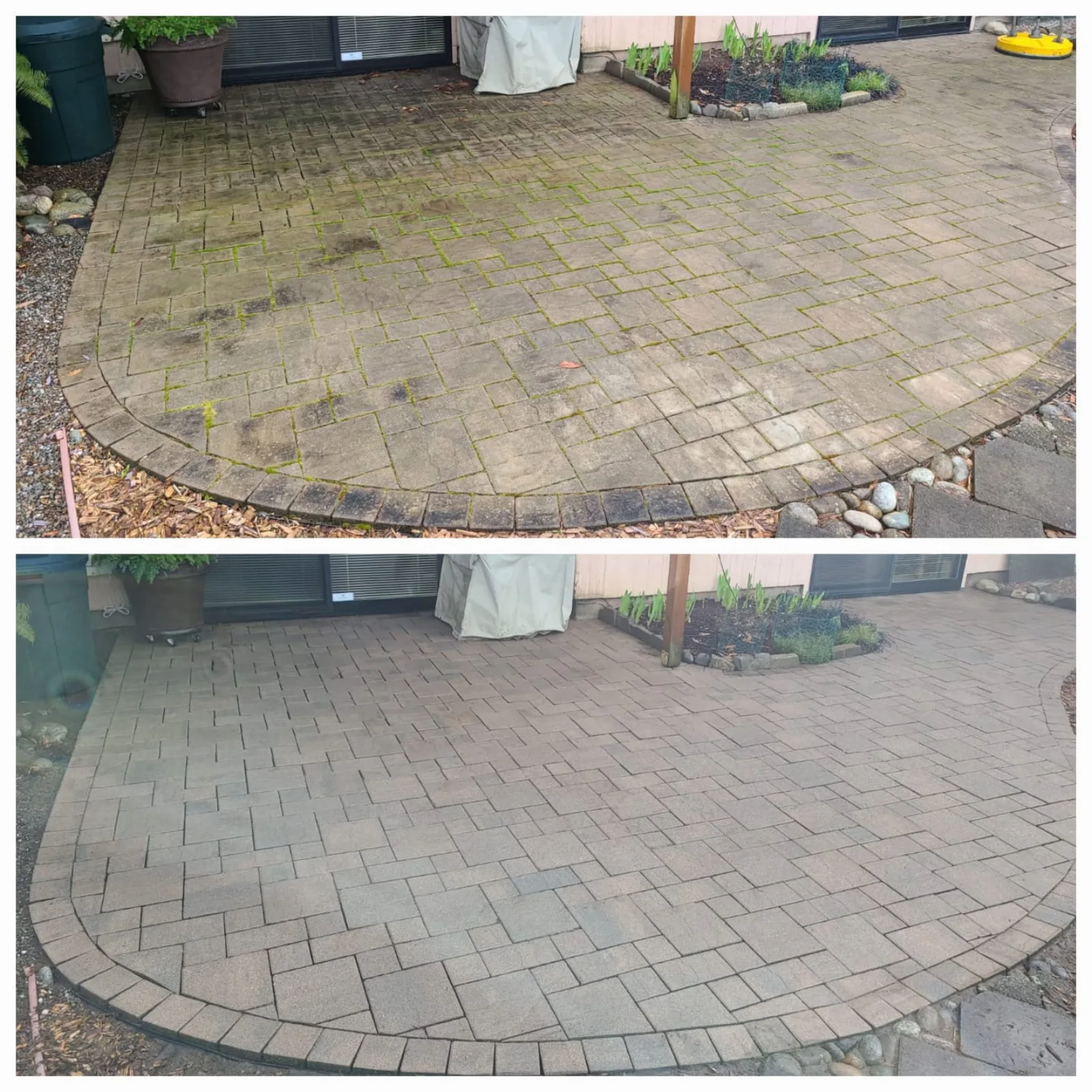
Moss in the joints, green algae, white efflorescence, and years of staining make a patio look tired. We clean and restore every patio surface — pavers, natural stone, brick, and concrete — matching the method to the material, with re-sanding and sealing available.
Why Seattle Patios Grow Moss, Weeds & White Haze
Your patio is where you actually live outdoors — and in the Pacific Northwest it's under constant pressure. Persistent damp and shade grow moss and algae in every joint and seam, weeds push up through failing sand, and the surface fades under years of traffic, staining, and weather.
There are really two different problems on a patio, and they need two different fixes. Organic growth — moss, algae, and lichen — is alive, so it has to be killed at the root or it returns within weeks. Inorganic staining — the white, chalky efflorescence that hazes pavers and stone, plus rust marks — is mineral, and needs a targeted acidic treatment instead. Get these backwards and the patio never really comes clean.
And the surface itself matters: concrete and brick are tough, pavers depend on their joint sand, and natural stone like travertine and flagstone is acid-reactive and can be permanently etched by the wrong cleaner. Knowing what you're standing on is the whole job.
How We Clean & Restore Patios
A proper patio restoration is more than a rinse — it's cleaning, joint work, and (optionally) sealing, in the right order, matched to your surface.
Identify the Surface
Pavers, brick, concrete, or acid-reactive natural stone — we identify exactly what you have before any water or chemistry hits it, because natural stone can be etched permanently by the wrong (acidic) cleaner.
Treat Growth & Stains Separately
Organic growth (moss, algae, lichen) gets a solution that kills it at the root. Inorganic stains — efflorescence, rust — get a targeted acidic treatment. Two problems, two chemistries, so both actually clear.
Controlled Cleaning
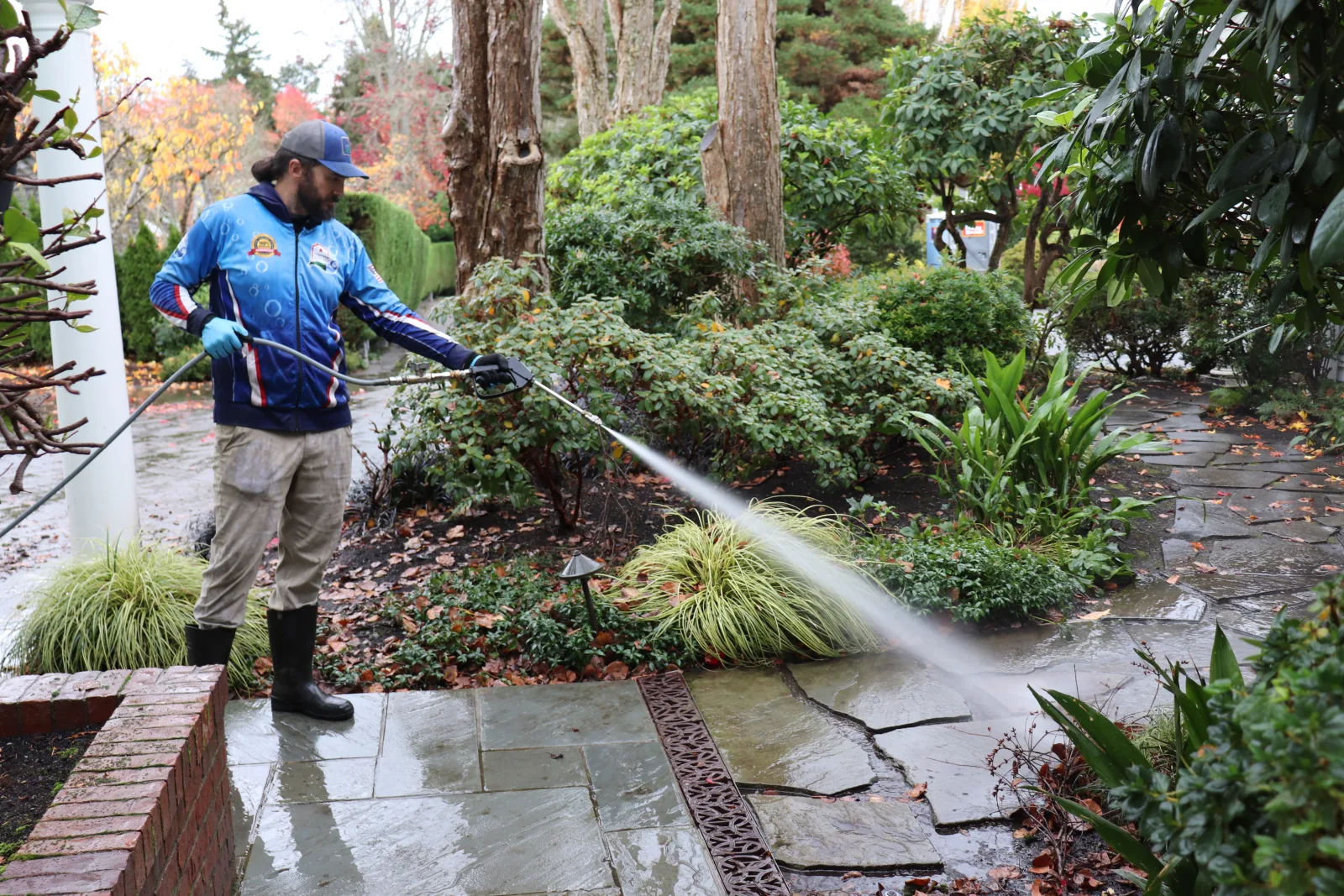
We clean at pressure matched to the surface — firm for concrete and brick, controlled on pavers so we don't blast out the joint sand, and stone-safe low pressure on natural stone.
Re-Sand & Seal (Optional)
If joint sand is failing or weed-infested, we strip and re-sand with polymeric sand to lock pavers and resist weeds. A quality sealer can then enhance color and protect the surface — using stone-appropriate sealers on natural stone.
Patio Surfaces We Clean & Restore
Each patio material needs its own approach — here's how we handle the ones common across Seattle and the Eastside:
Concrete Pavers
Cleaned of moss, algae, and efflorescence, with joint re-sanding available to lock pavers and resist weeds — then optionally sealed to protect color.
Brick Pavers
Soft washed at gentle-to-moderate pressure to eliminate moss and algae without cracking, plus efflorescence treatment where needed.
Natural Stone
Travertine, flagstone, bluestone, and limestone are acid-reactive — cleaned with stone-safe, pH-appropriate methods that won't etch or erode the surface.
Concrete Slab & Stamped
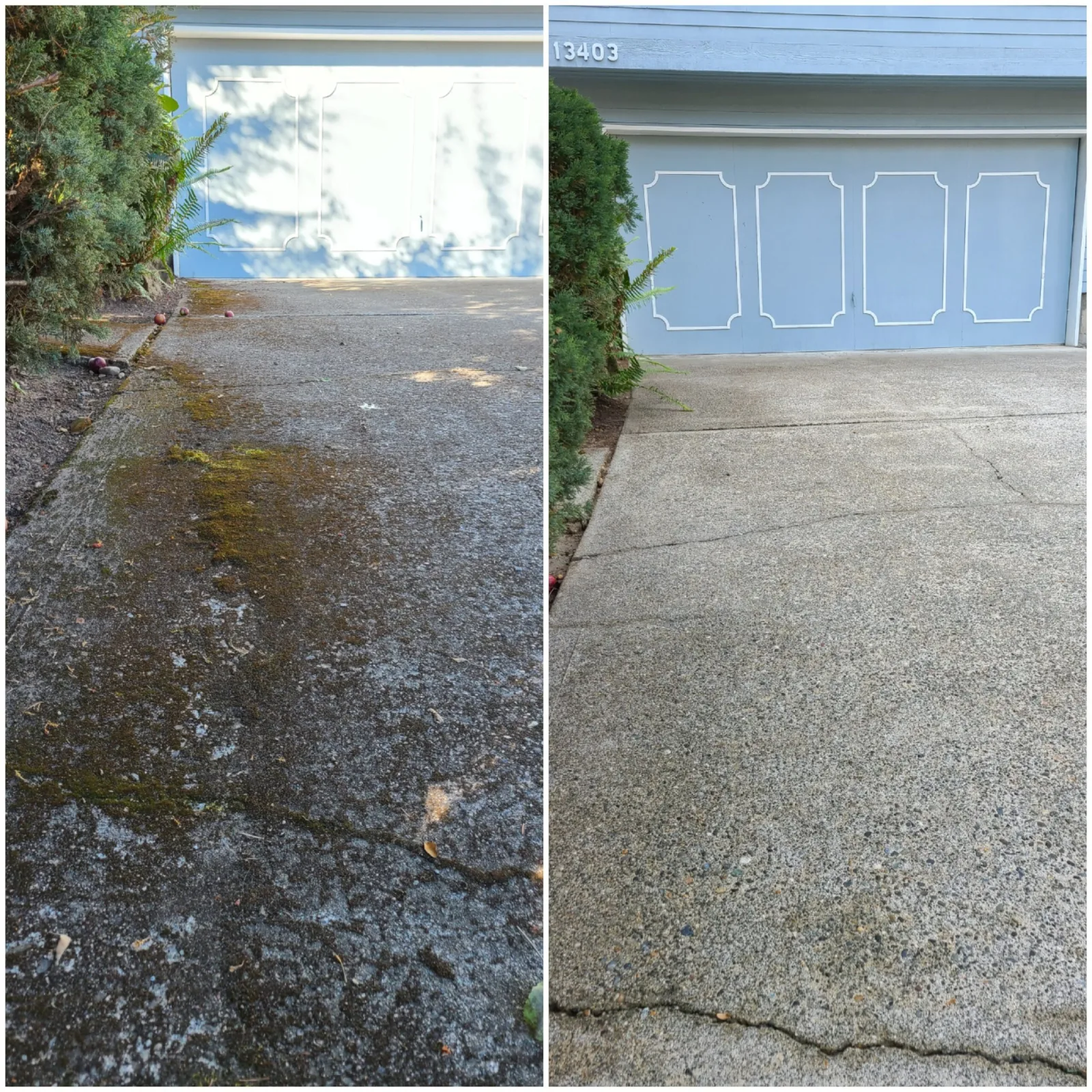
Poured and stamped concrete patios cleaned of oil, dirt, and biological staining, with methods that preserve stamped color and texture.
Joints & Weed Removal
Moss and weeds cleared from paver and flagstone joints and killed at the root — then re-sanded so they're slower to return.
Pool Decks & Coping
Pool surrounds and coping stone cleaned and sealed with slip-aware, stone-safe products for wet, high-traffic areas.
Patio Problems We Solve
Moss & Algae in Joints
The green, slick growth in every seam — killed at the root and cleared without blasting out the joint sand.
Weeds Between Pavers
Cleared and, with polymeric re-sanding, made much slower to return.
Efflorescence (White Haze)
The chalky mineral bloom on pavers and stone, dissolved with the right acidic treatment — not scrubbed at uselessly.
Rust & Mineral Stains
Rust from furniture, irrigation, and minerals treated as the inorganic stains they are.
Oil, Grease & Food Stains
The staining that patios and outdoor kitchens collect, lifted with targeted degreasing.
Faded, Tired Color
Surfaces restored — and, with an optional color-enhancing sealer, brought back richer than they've looked in years.
Our paver driveway and stone patio look like they were just installed. The team was meticulous and clearly experienced. Highly recommend for any Woodinville property.— Catherine W., Woodinville, WA · Paver Cleaning & Sealing
What Does Patio Cleaning Cost in Seattle?
Patio cleaning cost depends on the surface material, the total area, the staining involved, and whether you add re-sanding or sealing. Cleaning only is one price; a full clean, re-sand, and seal restoration is another — we quote each transparently so you can choose.
Surface & Area
Concrete, pavers, or natural stone — and total square footage — set the method and scope. We measure and match the approach to the material.
Staining & Growth
Heavy moss, weed-infested joints, efflorescence, or rust need extra treatment steps, accounted for upfront rather than as a surprise.
Clean vs. Full Restoration
A straight cleaning costs less; adding polymeric re-sanding and sealing costs more but dramatically extends the life and look of the patio.
The fastest way to an accurate price is a free quote. We respond within 24 hours — often same day.
Frequently Asked Questions
Can all patio surfaces be cleaned the same way?
No — and using the wrong method is how patios get damaged. Concrete and brick take firm pressure. Pavers need controlled pressure so the joint sand isn't blasted out. And natural stone like travertine, limestone, and flagstone is acid-reactive — the wrong (acidic) cleaner can permanently etch it. We identify your surface first, then match the pressure and chemistry to it.
What's the white haze on my pavers and how do you remove it?
That white, chalky haze is efflorescence — natural mineral salts migrating to the surface of concrete pavers and stone. It's not dirt, so scrubbing won't fix it. Efflorescence is an inorganic deposit that needs a specific acidic treatment to dissolve, which is different from how we remove organic growth like moss and algae. We treat it as part of a full paver restoration, ideally before sealing.
Do you re-sand paver joints after cleaning?
When needed, yes. Cleaning can reveal that joint sand is failing, weed-infested, or washed out. We can strip the old joint material and re-sand with polymeric sand, which hardens in the joints to lock pavers in place and help resist weeds and ants. Solid re-sanding is also what lets a sealer bond properly.
How does patio cleaning handle moss and weeds in the joints?
Moss and weeds between pavers and flagstone are organic growth, so we treat them with a solution that kills the root structure — not just a surface rinse that lets them return in weeks. We use controlled pressure to clear the joints without dislodging the stones, then re-sand if the joint material needs it.
Should I have my patio sealed after cleaning?
Sealing is optional but valuable, especially on pavers and porous stone. A quality sealer enhances color, resists staining from oil and organics, helps stabilize joint sand, and adds protection against moisture and freeze-thaw. On acid-reactive natural stone we use stone-appropriate sealers. We'll advise what's worth it for your specific surface.
Have a question we didn't answer? Call (425) 298-7041or submit a quote request — we respond within 24 hours.
Ready to Restore Your Patio? Book the Right Service
Patio work is delivered through these services — the right one depends on your surface:
Reclaim Your Outdoor Living Space
Moss, weeds, and white haze don't have to win. Get a free, no-obligation patio cleaning quote for your Seattle or Eastside home, usually same day. We serve Bellevue, Kirkland, Redmond, Sammamish, Bothell, Woodinville, and surrounding communities.
✓ Licensed & Insured✓ 5.0 ⭐ Google Rating✓ Free Quotes in 24hrs✓ 100% Satisfaction Guarantee