Fence Staining
in Seattle & the Eastside
A stain applied to properly prepared wood lasts 3–5 years. The same stain over a dirty or grey surface lasts months. The preparation is the job.
Why Most Fence Stain Jobs Fail Early
Fence stain failures almost always trace back to the same two skipped steps: the surface was not properly cleaned before staining, or it was cleaned but not brightened. Both matter, and neither is optional.
When a stain is applied over algae, grey oxidation, or cleaner residue left in the wood, it bonds to that layer rather than to the wood fiber underneath. The stain looks fine initially. But as the contaminated layer continues to break down and weather, the stain loses its bond and begins to peel, flake, or wear unevenly — typically within the first season or two.
A penetrating stain applied to properly prepared wood behaves completely differently. It is absorbed into the open grain, bonds at the fiber level, and weathers gradually and evenly. The same product, properly applied, lasts 3–5 years on a cedar fence versus a year or less on an improperly prepared one.
The preparation sequence is: clean with a wood-safe cleaner, apply a brightener to neutralise the cleaner and open the grain, allow the wood to dry thoroughly, then stain. That order is what makes the result last. We do not stain over wet or uncleaned wood, ever.
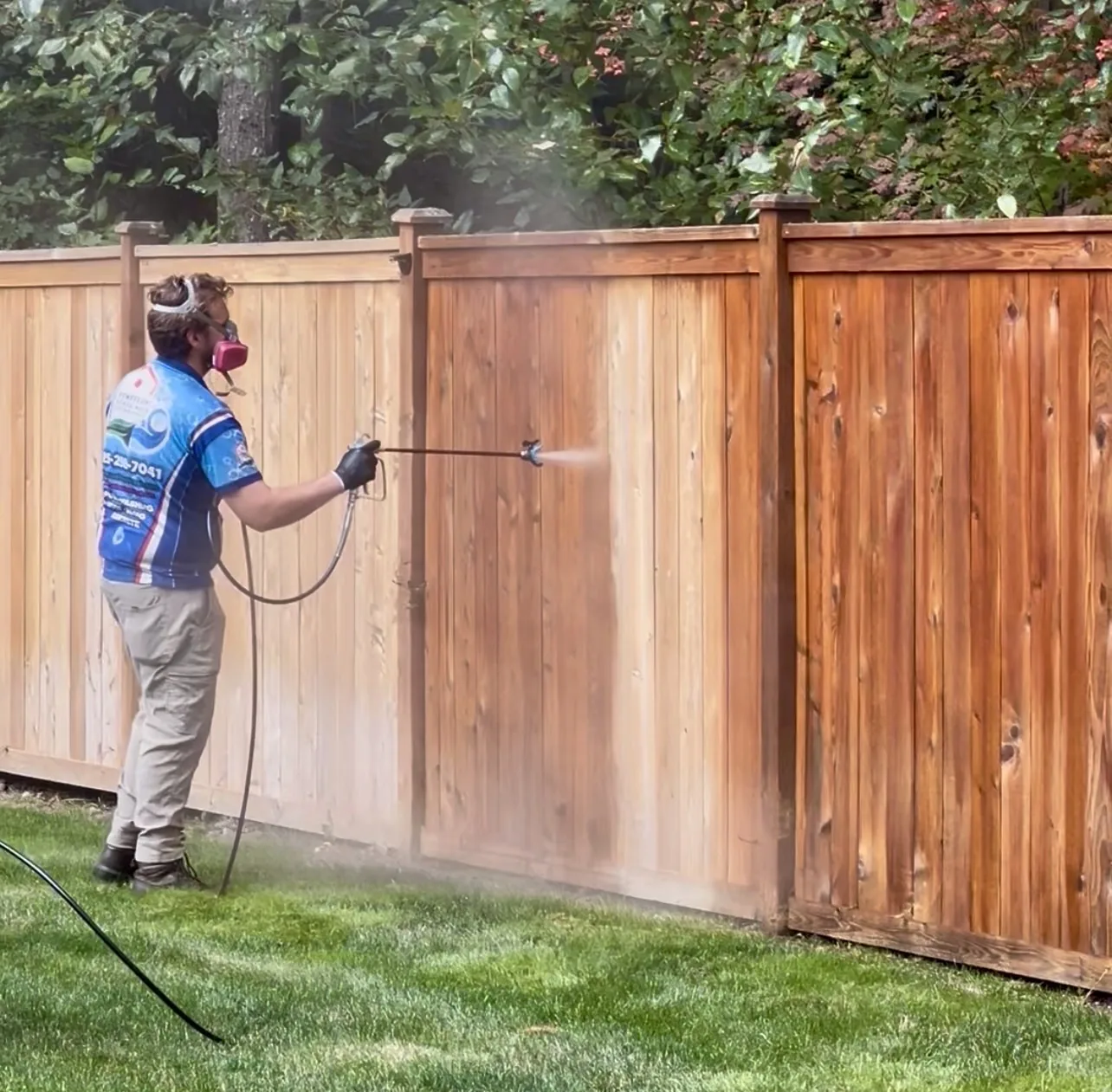
The Fence Staining Process
Preparation is most of the job. The staining itself is the final step in a sequence that cannot be shortcut.
Clean & Brighten the Fence
The fence is washed with a wood-safe cleaner to remove growth, grey, and dirt. A brightener is then applied to neutralise the cleaner, restore the warm wood tone, and open the grain. See our fence brightening service for the full detail on this step.
Allow Full Drying Time
Stain applied to wet wood traps moisture underneath and fails quickly. We wait for full drying — the right number of days depends on the wood, the weather, and the season. This is non-negotiable.
Mask & Protect Surroundings
Landscaping, paving, and structures adjacent to the fence are masked and protected. Spray application carries further than brush, and we control it.
Apply Stain — Spray or Brush
Penetrating stain is applied by spray for most fence sections — faster and more even on board-and-batten and picket profiles. Detail areas, posts, and trim are back-brushed to ensure full penetration. We work in manageable sections.
Inspect & Touch Up
Full inspection before we pack up — thin spots, misses, and runs addressed before the stain sets. We walk the fence with you so the result is visible before we leave.
Fence Types We Stain
Every bare wood fence — residential and commercial:
Cedar Board-on-Board
The most common Seattle and Eastside fence style. Spray-applied penetrating stain gets into the overlap and both faces of each board.
Cedar Picket Fencing
Picket profiles with exposed top cuts and rails. Thorough application to the top cuts where moisture enters and rot starts.
Pressure-Treated Wood
Treated lumber needs longer dry time before staining — the preservative treatment must cure first. We assess before scheduling.
Redwood
High-tannin redwood stains beautifully and holds color well. The natural oils mean longer dwell times on the brightening step.
Split Rail & Post Fencing
More surface exposure than board fencing. Spray application gets into the rough, uneven surface of split rails effectively.
A Stain Job That Lasts
Full Preparation Included
Cleaning and brightening are part of our staining process — not upsells or separate bookings. The result depends on the preparation.
Penetrating, Not Film-Forming
We use penetrating stains that absorb into the wood fiber rather than forming a surface film that peels. The right product for the PNW climate.
UV & Moisture Protection
Quality penetrating stains include UV inhibitors and water repellent — both important for cedar fencing that sees direct sun and persistent moisture.
Per-Board Inspection
We look at the wood condition as we stain. Boards that are too far gone to hold a finish are flagged so you can make an informed call.
Full-Property Bundling
Fence staining pairs naturally with deck staining, house washing, or a complete property clean on one visit.
Licensed & Fully Insured
Licensed contractor, full liability coverage, and experienced wood finishing crews.
They sprayed it in a morning and my fence looks brand new. Every board, both faces, even the posts. I appreciated that they would not stain until the wood was properly dry — they knew what they were doing.— James L., Bellevue, WA · Cedar Fence Staining
Fence Staining Cost in Seattle
Fence staining is priced by linear footage and fence height. Preparation — cleaning and brightening — is included in our staining quotes. Stain material cost varies by the product selected. We provide transparent quotes before any work begins.
Linear Footage & Height
The length and height of the fence set the scope for materials and labor.
Stain Product
Penetrating oil-based stains, water-based penetrating stains, and stain-sealer combinations are all available at different price points.
Bundle Discount
Combining fence staining with deck staining, house washing, or other exterior work on one visit reduces the per-service cost.
The fastest way to an accurate price is a free quote. We respond within 24 hours — often same day.
Frequently Asked Questions
Does the fence have to be cleaned before staining?
Without exception — and it also needs to be brightened. A stain applied over a dirty or grey surface bonds to the contamination and not to the wood. It looks fine for a few months, then peels or flakes because the bond was never to the fiber itself. Cleaning removes the growth and dirt; brightening neutralises the cleaner residue and opens the grain so the stain can penetrate properly. Skipping either step is the reason most fence stain jobs fail early.
What is the difference between a stain and a sealer?
A stain adds color and penetrates the wood fiber — it is absorbed rather than sitting on the surface. A sealer forms a surface film that repels water. Penetrating stains and stain-sealers (which do both) are generally better for fence boards than film-forming sealers, because film coatings peel as the wood moves seasonally. We recommend penetrating oil-based stains for most cedar fencing in the Pacific Northwest — they handle the moisture cycling here better than film finishes.
How often does a stained fence need to be re-stained?
Every 3–5 years for a properly prepared fence with a quality penetrating stain. South- and west-facing sections in direct sun will fade faster than shaded runs. Sections under heavy tree cover stay cleaner but benefit from checking for algae growth on the stained surface. We will tell you what to watch for and when to book the next service.
Can you stain a fence that was previously painted?
It depends on the condition of the paint. A fence with intact, well-bonded paint cannot be stained over — the paint prevents penetration. It would need to be stripped first. A fence with failing or peeling paint is in a similar position — we cannot stain over failing paint, it has to be removed. We will assess the existing finish and tell you honestly what the right next step is.
What colors are available?
We work with a range of penetrating stain colors from the manufacturers we use — natural cedar tones, redwood, driftwood grey, and darker brown finishes are all commonly requested. We can show you samples. The color you see on a swatch will appear richer or lighter on your specific wood depending on its porosity and grain, so we typically do a test section first.
Have a question we didn't answer? Call (425) 298-7041or submit a quote request — we respond within 24 hours.
Deck & Fence Cleaning Across Seattle & the Eastside
Fence staining across the Pacific Northwest is a different conversation than in drier climates. The moisture cycling here means penetrating stains consistently outlast film-forming sealers on wood fencing. Cedar fences in the tree-canopy neighborhoods of Woodinville, Issaquah, and Sammamish need the stain to handle persistent damp rather than just UV exposure. South-facing fencing in open suburban sections of Renton, Everett, and Lynnwood sees more UV than moisture and benefits from products with strong UV inhibitors.
Choose your city for local service details.
Don't see your city? We work across the greater Seattle area, roughly an hour out from Kenmore. See the full service area, or call (425) 298-7041 and we'll tell you straight away whether you're in range.
Complete Fence Restoration Services
Staining is the final step in fence restoration — here is the full picture:
Restore and Protect Your Cedar Fence
A properly stained cedar fence looks great and stays protected for years. Free quote for fence cleaning, brightening, and staining across Seattle and the Eastside — usually same day. We serve Bellevue, Kirkland, Redmond, Sammamish, Bothell, Woodinville, and surrounding communities.
✓ Licensed & Insured✓ 5.0 ⭐ Google Rating✓ Free Quotes in 24hrs✓ 100% Satisfaction Guarantee