Restaurant Power Washing in Seattle: Grease, Sidewalks, and Staying Inspection-Ready
A guest forms an opinion about your restaurant before the host says a word. They form it on the sidewalk, looking at the entry mat, the patio chairs, the grout between the pavers, and the dark halo around the door handle. None of that is on your menu, and all of it is on your review page.
Restaurant exteriors are also genuinely harder to clean than almost any other commercial property we service. An office building gets dust, pollen, and Pacific Northwest moss. A restaurant gets all of that plus airborne cooking grease, spilled food, foot traffic at ten times the density, and a refuse area that attracts pests if it is not maintained. The techniques that work on an apartment complex will not touch a grease-saturated sidewalk.
Here is what actually goes into cleaning a food service exterior properly.
Grease is a different problem than dirt
Most exterior soiling is loose. Dirt, pollen, road film, and organic growth sit on top of a surface and release with water pressure and a surfactant. Grease does not behave that way.
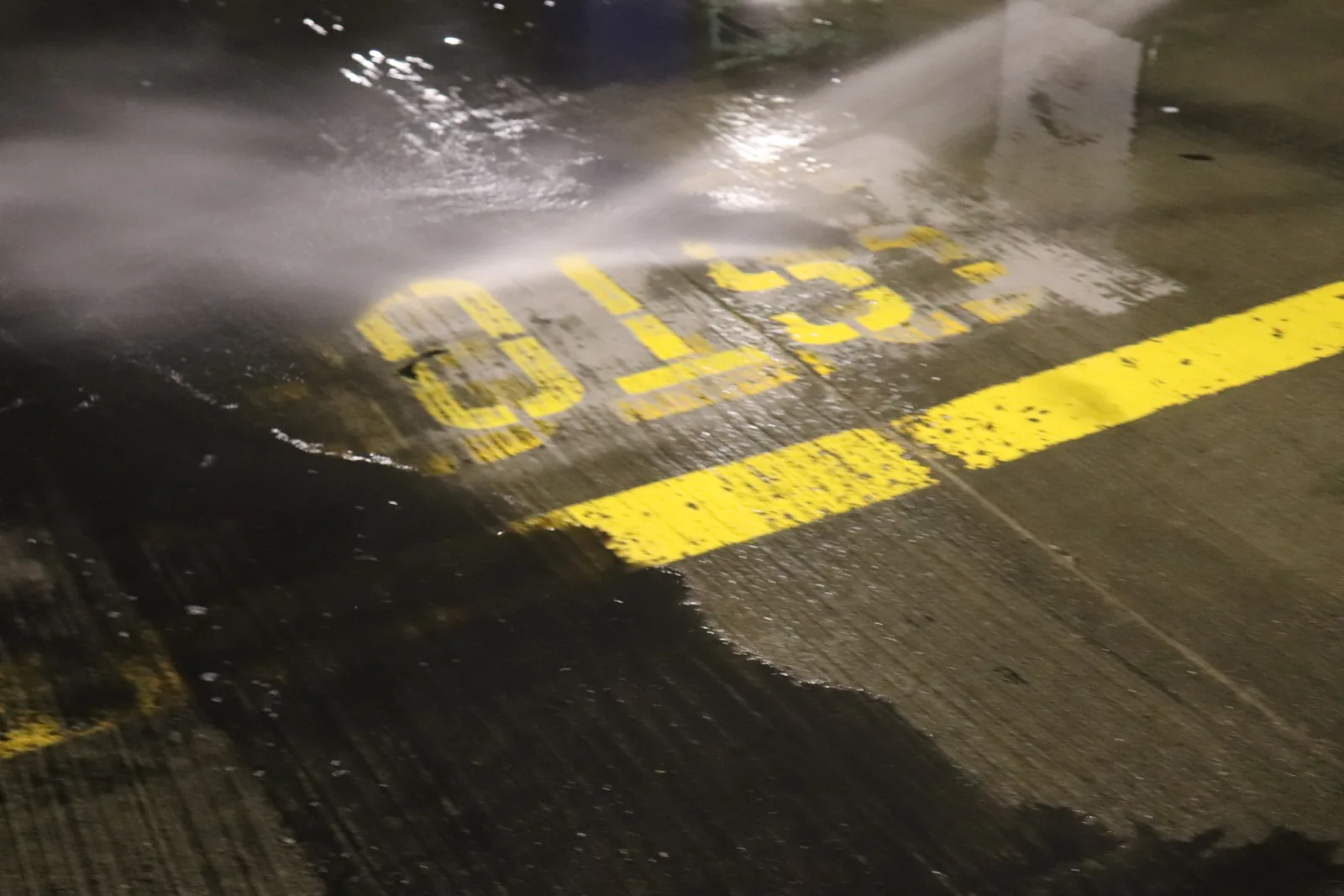
Cooking grease is hydrophobic. Cold water does not just fail to remove it, it beads off and leaves the deposit untouched. Worse, on porous surfaces like broom-finished concrete, grease wicks down into the pore structure over months of exhaust fan drift and dripped takeout bags. A pressure washer aimed at that surface will clean the top layer, look great while it is wet, and then dry to the same shadow it started with, because the actual contamination is a quarter inch below the surface.
Removing it takes three things working together:
Heat. Hot water changes the viscosity of the grease and lets it release, which is why temperature matters more than pressure on a greasy surface. This is the single biggest difference between a rig that can clean a restaurant and one that cannot. Plenty of contractors run cold water only. Ask before you book.
Chemistry. A degreaser with the right alkalinity emulsifies the grease so it can be carried away in water rather than smeared around. The concentration matters, and so does matching it to the substrate. What is safe on concrete will etch some natural stone.
Dwell time. The degreaser needs minutes on the surface to work. Contractors in a hurry spray and immediately rinse, which accomplishes very little. If a crew is in and out of your sidewalk in fifteen minutes, they did not degrease it.
Get any one of those wrong and you get a sidewalk that looks clean for a day.
Ask whether the rig runs hot water, and at what temperature. Plenty of contractors run cold water only, which cannot remove cooking grease at any pressure. This single question eliminates most of the operators who should not be quoting your property.
The four zones, and why each needs a different approach
Restaurant exteriors are not one cleaning job. They are four, and they have almost nothing in common.
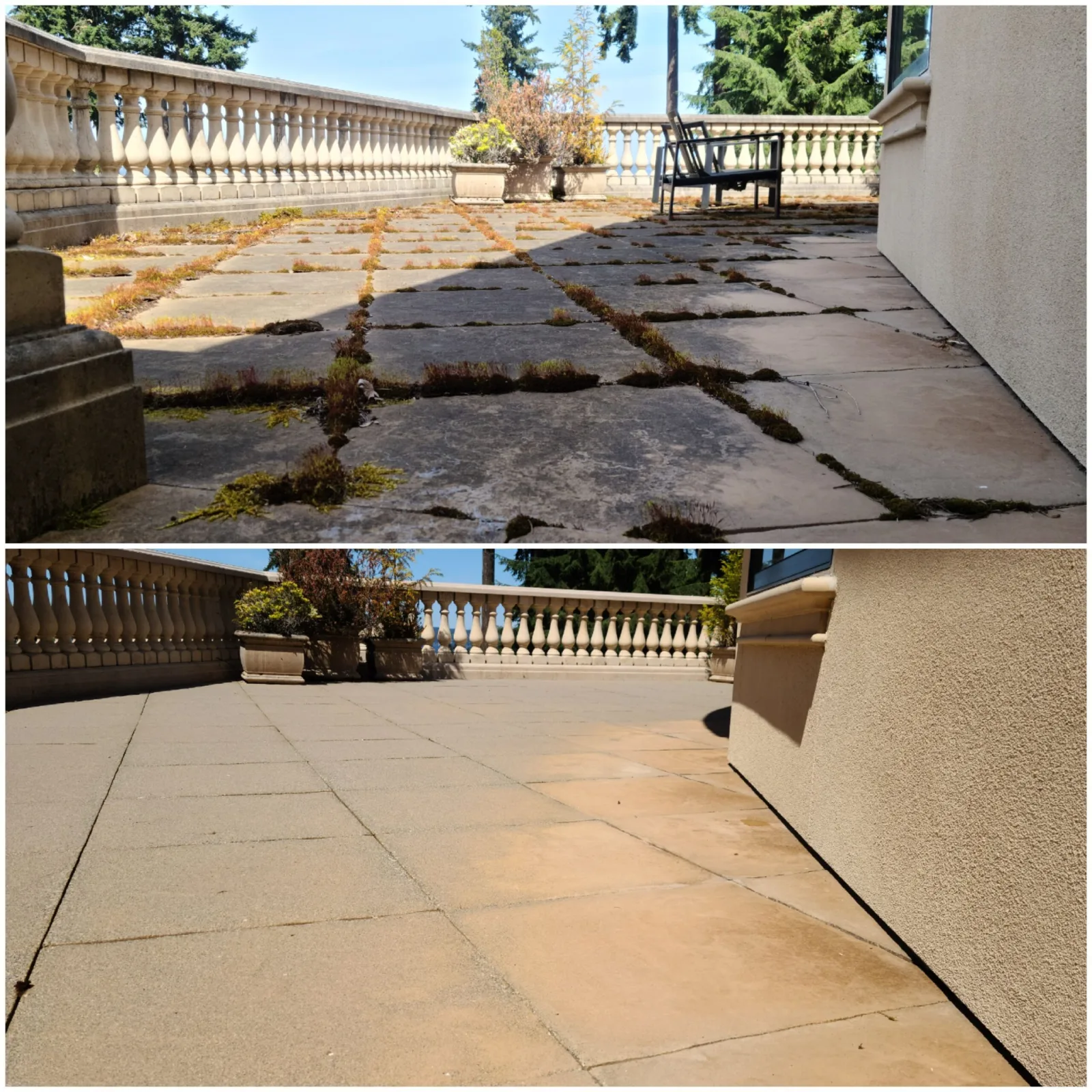
The entry and sidewalk. High foot traffic, gum, drink spills, and the grease halo that spreads out from the door. This is the zone that gets photographed. It needs a flat surface cleaner rather than a wand, because a wand leaves stripe marks across a large flat surface and a surface cleaner does not. Gum comes off separately, usually with steam or a targeted scraper before the main pass.
The patio and furniture. Tables, chairs, umbrellas, railings, and whatever the floor surface is. Almost none of this should see high pressure. Powder-coated aluminum, teak, resin wicker, and cushion fabric all take damage from a pressure wand. These get a soft wash, meaning low pressure and the cleaning is done by chemistry and dwell rather than force. Umbrella fabric in particular needs care, since the wrong product will strip color or damage waterproofing.
The dumpster pad and back of house. The least glamorous and arguably the most important. A dumpster enclosure that has absorbed months of leakage smells, attracts rodents and flies, and is exactly the kind of thing a health inspector notices. It also tends to be the greasiest concrete on the property. Enclosure walls usually need attention along with the pad itself.
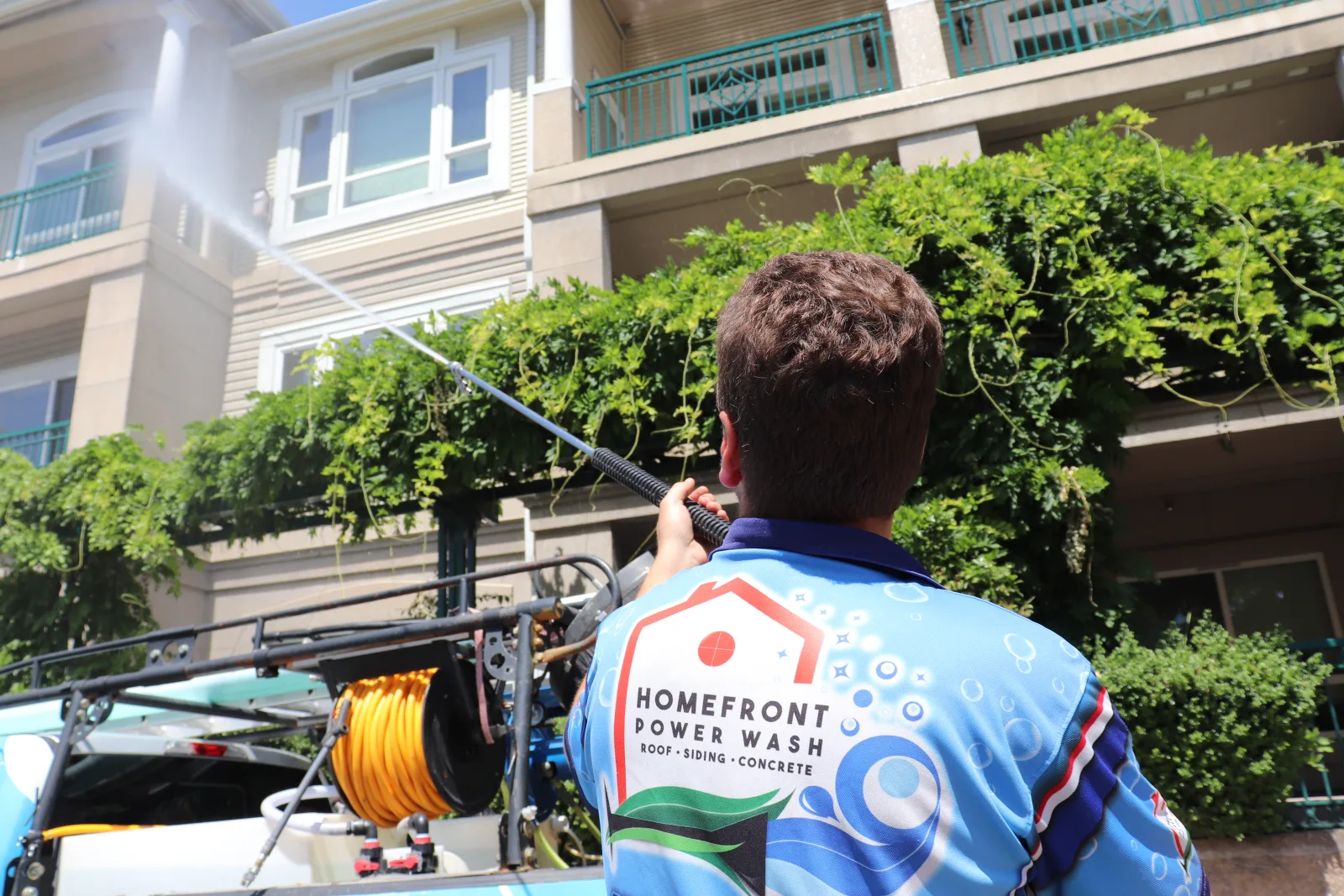
The building face and awnings. In our climate this is mostly about organic growth. North-facing walls and anything under a drip line grow moss, algae, and mildew. Awnings are almost always soft wash only, since vinyl and fabric awnings will delaminate or seam-split under pressure. Any surface that has a mechanical fastener or a sealed seam is a soft wash candidate by default.
Where the wash water goes matters
This is the part most restaurant owners have never been asked to think about, and it is the part that separates a legitimate commercial contractor from someone with a trailer.
When you pressure wash a greasy surface, the runoff is no longer just water. It carries emulsified grease, food waste, and cleaning chemistry. Letting that flow into a storm drain is a problem, because storm drains in our region generally discharge to surface water without treatment. This is not a gray area, and enforcement is real.
Doing it correctly means containing and recovering the wash water. In practice that means a surface cleaner with integrated vacuum recovery, berms or drain mats to block the inlet, and the recovered water disposed of properly rather than pushed down the nearest grate. It is slower and it requires equipment that a lot of operators do not own.
If you are getting quotes and one is dramatically cheaper than the others, this is usually why. The cheap quote is planning to push your grease into the storm drain, and the liability for that does not sit only with the contractor.
Scheduling around a service window
Nobody power washes a restaurant at noon. The work happens overnight or in the early morning, between close and prep, which is a narrow and inflexible window.
That has practical consequences worth planning around. Surfaces need time to dry before furniture goes back, so patio work needs to finish well before the first seating. Noise matters if you have residential neighbors, and some jurisdictions have overnight noise restrictions that affect when equipment can run. Access to the dumpster enclosure has to be coordinated with your hauler’s pickup schedule, since a full dumpster cannot be moved off the pad.
A contractor who has done restaurant work will ask about all of this before quoting. One who has not will ask what time you want them there.
How often each zone needs it
There is no single frequency for a restaurant, because the zones soil at completely different rates.
| Zone | Target frequency | Floor before it gets expensive | Method |
|---|---|---|---|
| Entry & sidewalk | Monthly at high volume | Quarterly | ! Hot water + surface cleaner |
| Dumpster pad & back of house | Monthly in warm months | Quarterly | ! Hot water + degreaser |
| Patio & furniture | Pre-season, plus mid-season | Annually | ✓ Soft wash only |
| Building face & awnings | Annual to semiannual | Every 2 years | ✕ Never pressure on awnings |
The entry and sidewalk are the fastest. High-volume locations generally need monthly service to stay consistently presentable, and quarterly is the absolute floor before the grease starts setting into the concrete in a way that takes significantly more work to reverse.
The dumpster pad is similar. Monthly during warm months is reasonable, since odor and pest pressure rise with temperature. It can usually stretch in winter.
Patios are seasonal. A thorough clean before the outdoor dining season opens, and a mid-season refresh if you run a busy patio, covers most operations.
The building face and awnings are annual to semiannual in our climate, driven more by moss and algae growth than by anything your kitchen produces. Our guide to power washing frequency in the Seattle climate covers the growth cycle in more detail.
The economics favor frequency here in a way that surprises people. Maintaining a clean surface on a schedule is significantly cheaper per visit than restoring a neglected one, because restoration takes hot water, heavy chemistry, and hours, while maintenance takes a fraction of that.
What to ask before you hire
Five questions will separate a real commercial contractor from a residential operator taking a swing at your account.
- Do you run hot water, and at what temperature?
- How do you contain and dispose of wash water?
- Are you insured for commercial work, and can you produce a certificate naming us?
- What do you use on the awnings and the patio furniture?
- Can you work between 11pm and 5am?
If the answers are vague on the first two, keep calling.
Working with Homefront
We service restaurants, bars, cafes, and food service properties across Seattle, Bellevue, Kirkland, Bothell, and the greater Eastside, on overnight and early-morning schedules built around your service window. Soft wash for everything that should not see pressure, and we are specific up front about what each zone needs and what we will bring to do it.
If you want a walkthrough and a zone-by-zone quote, request a quote and we will come look at the property. We can also talk through a recurring schedule that keeps the entry and dumpster pad on maintenance intervals rather than letting them get to the point where they need restoration.
We walk the property, tell you what each zone actually needs, and are specific about equipment and scheduling before you commit. Certificate of insurance naming your entity on request.
For a broader look at commercial exterior maintenance, see our post on how power washing protects commercial properties in the Pacific Northwest.
Ready to Transform Your Property?
Get a free, no-obligation power washing quote from Seattle's #1 rated team.