Rust Stain Removal
The orange stain that ignores the pressure washer and gets worse if you reach for bleach. Here is why, and what actually works.
Rust Is a Reaction, Not a Deposit
Almost everything else we remove sits on a surface or grows into it. Rust is different. Iron in contact with water and oxygen produces iron oxide, and that oxide bonds chemically with the concrete or masonry it forms against. There is no layer to lift off, which is exactly why pressure accomplishes nothing except wearing the slab.
It also explains the most expensive mistake people make here. Chlorine bleach, the thing that works on moss and algae, is an oxidiser. Used on rust it can drive the reaction further and set the stain harder into the concrete. Rust wants acidic or purpose-made rust-removing chemistry, which is the opposite end of the scale.
The shape of the stain usually tells us the source before we arrive. A fan radiating across a driveway is irrigation water. A ring or a set of feet is metal furniture. A scatter of small spots across a wide area is fertilizer thrown by a spreader. A stain running in a straight line or a grid pattern is rebar or mesh corroding inside the slab, and that one is a different conversation.
Most of what we treat is on driveways and walkways, with the rest on brick and stone, where the chemistry has to be tested before it goes anywhere visible. It is often found next to efflorescence, which comes from inside the material in much the same way.
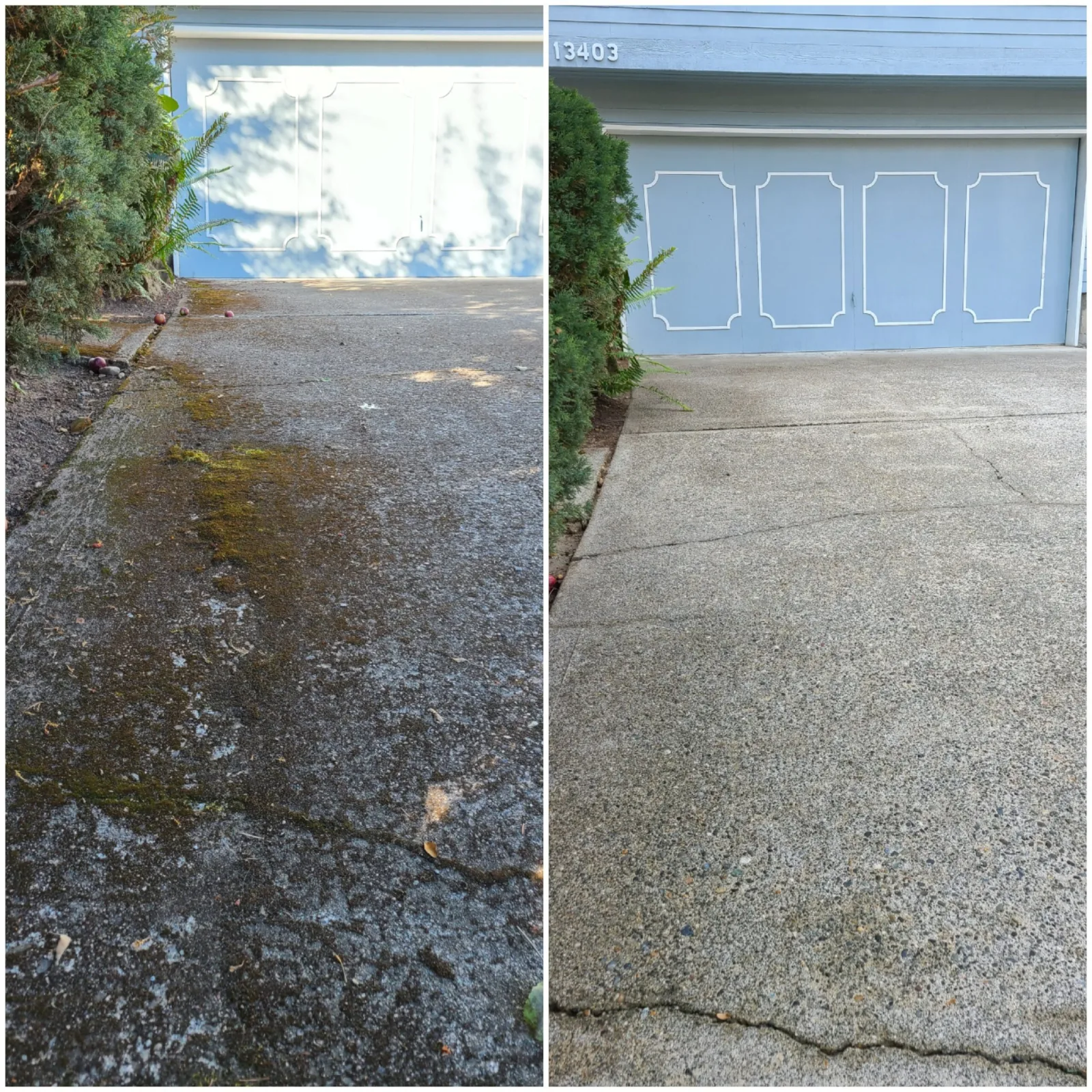
How We Remove It
Rust is the one contaminant where identifying the source comes before anything else, because it determines both the chemistry and whether the result will last.
Identify the Source
Sprinkler, furniture, fertilizer, or rebar inside the slab. The first three are removable. The fourth will keep returning until the concrete itself is addressed, and you deserve to know that before paying for a clean.
Test a Small Area
Rust-removing products are aggressive and some masonry and coloured concrete reacts to them. We test somewhere inconspicuous before treating anything visible.
Apply Targeted Chemistry and Dwell
A rust-specific product is applied and given working time. No chlorine goes anywhere near it, for the reason above.
Neutralise and Rinse Thoroughly
Acidic products have to be fully neutralised and flushed, with surrounding plants pre-wetted and rinsed, or you trade a rust stain for a different problem.
Clean the Whole Surface
As with oil, the full slab is cleaned so the treated area does not end up as a bright patch on a weathered driveway.
Where We Find It
Rust staining has a small number of sources and each leaves a recognisable signature.
Sprinkler Fans on Driveways
Wide arcs of orange radiating from a head, caused by dissolved iron in irrigation water. Very common and very treatable.
Under Metal Furniture
Rings and foot marks on patios where a table or chair has stood on damp stone or concrete through a wet season.
Fertilizer Scatter
A spray of small orange spots across a driveway or walkway where a spreader threw iron-containing product onto hardscape.
Rebar Lines in Slabs
Stains following a straight line or a grid. The source is corroding steel inside the concrete, so cleaning is temporary relief.
Commercial Downspouts & Fixtures
Bleed marks running down block walls and walkways from corroding metal fixtures, railings and downspout straps.
Frequently Asked Questions
Why will my pressure washer not touch the rust stain?
Because rust is not a deposit sitting on the concrete, it is iron oxide that has reacted with and bonded into the surface. There is nothing there to blast away. What pressure does instead is erode the cement paste around it, which lightens the surrounding concrete and makes the stain stand out more, on a surface that is now permanently rougher.
What is causing it in the first place?
Four common sources. Irrigation water with dissolved iron, which produces fan-shaped stains radiating from a sprinkler head. Metal furniture or planters left standing on damp concrete. Fertilizer containing iron, which gets flung onto a driveway by a spreader and leaves a scatter of small spots. And rebar or wire mesh corroding too close to the surface, which shows as a stain following a straight line or a grid.
Can rust stains be removed completely?
Surface rust from sprinklers, furniture or fertilizer usually responds very well. Staining from corroding rebar inside the slab is different, because the source is still in there and still rusting: we can clear what has come to the surface, but it will return until the underlying issue is dealt with, which is a concrete repair question rather than a cleaning one. We will tell you which of the two you have.
Is it true that bleach makes rust worse?
Yes, and it is a common and frustrating mistake. Chlorine-based cleaners can oxidise the iron further and set the stain harder into the concrete. Rust needs an acidic or specialist rust-removing product, which is the opposite chemistry to what clears moss and algae. Reaching for the bottle already under the sink is how a removable stain becomes a permanent one.
Have a question we didn't answer? Call (425) 298-7041or submit a quote request — we respond within 24 hours.
Driveway Cleaning Across Seattle & the Eastside
Sources vary by the kind of property. The larger irrigated lots common in Sammamish, Woodinville, Medina and Newcastle produce the sprinkler-fan staining more than anywhere else we work, and often the fertilizer scatter alongside it. Older slabs around Seattle, Renton and Snohomish are more likely to show rebar-line staining, which is the version we have to be honest about. Commercial and multifamily sites in Lynnwood, Everett and Bellevue bring the fixture and downspout bleed instead.
Pick your city for what we usually find locally.
Don't see your city? We work across the greater Seattle area, roughly an hour out from Kenmore. See the full service area, or call (425) 298-7041 and we'll tell you straight away whether you're in range.
Related Services
Rust removal is almost always combined with one of these:
Send a Photo and We Will Identify the Source
The shape of the stain usually tells us what caused it and whether it will stay gone. Free assessment across Seattle, Bellevue, Kirkland, Redmond, Sammamish, Bothell, Kenmore, Woodinville and the wider Eastside.
✓ Licensed & Insured✓ 5.0 ⭐ Google Rating✓ Free Quotes in 24hrs✓ 100% Satisfaction Guarantee