Efflorescence Removal
The chalky white haze on pavers and brick. It comes from inside the masonry, which is why washing it off brings it straight back.
The Deposit Is Coming Out of the Material, Not Landing On It
Efflorescence is mineral salt. Masonry products, pavers, brick, block and the mortar between them, contain naturally occurring soluble salts. Water moving through the material dissolves them, carries them to the surface and then evaporates, leaving the salt behind as a white or greyish bloom.
That mechanism explains the two things that frustrate people most about it. It appears on brand new, perfectly good installations, because new material has the most unspent salt in it. And it comes back after you wash it off, because washing introduces more water, which dissolves more salt and carries it out as the surface dries.
It also explains the one genuinely costly mistake. Sealing over efflorescence locks the deposit under the sealer as a permanent white haze, and a sealer that stops moisture moving through the masonry can push the deposition behind the surface and fail from underneath. Remove, dry, then seal. In that order, with no shortcuts.
It shows up most on newer paver installations and on brick and block, and it is the one thing that must be gone before a sealer is applied. On patios it is frequently mistaken for a stain and scrubbed, which only feeds it.
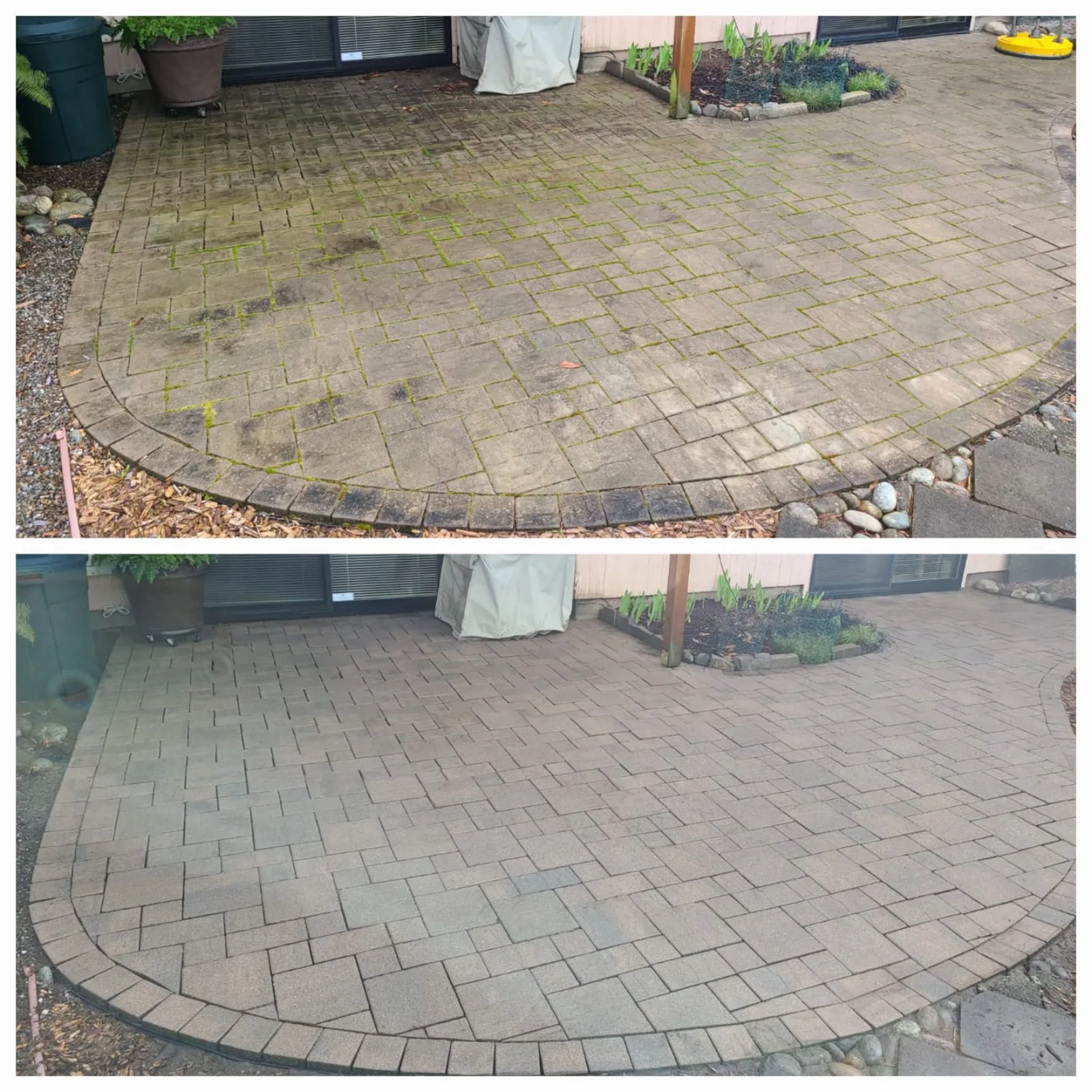
How We Remove It
This is one where doing less, but correctly, beats doing more. Water is the mechanism, so the method has to work around that rather than against it.
Confirm It Is Efflorescence
White bloom that returns after rinsing, on masonry, is almost always efflorescence. We rule out the lookalikes first, including mineral deposits from hard water and the residue left by the wrong cleaning product.
Dry Removal Where Possible
Light deposits often come off with brushing on a dry surface, which avoids introducing the water that feeds the cycle. If that will do the job, there is no reason to do more.
Apply a Purpose-Made Remover
Heavier deposits need an efflorescence-specific product that dissolves the salts rather than redistributing them. General cleaners and plain water will not do this.
Neutralise, Rinse and Dry
The surface is neutralised and flushed, then given time to dry properly. Surrounding plants are pre-wetted and rinsed as standard.
Only Then Consider Sealing
If sealing is part of the plan, it happens after the surface is clean and genuinely dry, and only if the weather gives us the window for it. If it does not, we will tell you to wait rather than trap the problem.
Where We Find It
Efflorescence shows up wherever water can move through masonry and evaporate off a face.
New Paver Installations
The most common case by a distance. New material carries the most unspent salt, and the bloom often appears within the first year.
Brick Veneer & Chimneys
White streaking on brick elevations, often worst below sills and in the areas that take the most driven rain.
Block & Retaining Walls
Where water moves through from the soil side, which keeps feeding the process until the drainage behind the wall is addressed.
Paver Driveways & Patios
Across paver faces and along joints, often noticed first after a wet spell when the surface dries out.
Commercial Masonry & Planters
Block walls, entry features and planters, where it reads as neglect even though it is a material process.
Frequently Asked Questions
What is the white powder on my pavers?
Almost certainly efflorescence. Water moving through the masonry dissolves naturally occurring mineral salts, carries them to the surface, and evaporates, leaving the salts behind as a white or greyish bloom. It is not mould, it is not a manufacturing fault, and it is not a sign anything has been done wrong. It is extremely common on new paver and block installations in particular.
Will it go away on its own?
Often, yes, eventually. Rain and weathering gradually wash the deposits off and, once the excess salts in the material have worked their way out, it usually stops recurring. On a new installation that process can take a year or more, which is longer than most people want to look at it. Treatment simply gets you there sooner.
Why did it come back after I washed it off?
Because washing with water does the one thing that drives the process: it introduces more water into the masonry, which dissolves more salts and carries them back to the surface as it dries. That is the classic efflorescence trap. It needs a purpose-made efflorescence remover rather than a rinse, and ideally conditions that let the surface dry properly afterwards.
Can I seal over it?
Not until it is gone, and this matters. Sealing over efflorescence traps the deposit under the sealer, where it shows as a permanent white haze you can no longer reach. Worse, a sealer that blocks moisture movement can push the salt deposition behind the surface and cause the sealer itself to fail and cloud. The order is always: remove it, let it dry, then seal.
Have a question we didn't answer? Call (425) 298-7041or submit a quote request — we respond within 24 hours.
Paver Sealing Across Seattle & the Eastside
This one maps almost exactly to how recently a neighbourhood was built. The newer developments across Sammamish, Issaquah, Mill Creek and Newcastle have the most paver and block installed in the last fifteen years, and new masonry is where efflorescence shows up hardest. Older masonry around Seattle, Medina and Snohomish has usually worked most of its soluble salt out already, so recurring bloom there more often points at a moisture source worth tracing rather than at the material itself.
Choose your city for what we typically find locally.
Don't see your city? We work across the greater Seattle area, roughly an hour out from Kenmore. See the full service area, or call (425) 298-7041 and we'll tell you straight away whether you're in range.
Related Services
Efflorescence is usually dealt with as part of one of these:
White Bloom That Keeps Coming Back?
If washing it off buys you a few weeks and then it returns, it is efflorescence and it needs different handling. Free assessment across Seattle, Bellevue, Kirkland, Redmond, Sammamish, Bothell, Kenmore, Woodinville and the wider Eastside.
✓ Licensed & Insured✓ 5.0 ⭐ Google Rating✓ Free Quotes in 24hrs✓ 100% Satisfaction Guarantee