Vinyl Siding Cleaning
The most common siding in our service area, and the one most often damaged by the wrong approach. Here is how vinyl is actually built, and what that means for cleaning it.
Vinyl Is Designed to Shed Water Downward. Only Downward.
Vinyl siding is not a sealed skin. It is a set of overlapping courses hung on the wall, deliberately left loose so the panels can expand and contract through temperature swings without buckling. Water running down the face is shed from one course to the next and never gets behind.
Point a pressure washer upward or sideways at it and you defeat that design completely. Water goes up behind the course and into the wall cavity, where it sits against sheathing and insulation. The damage is invisible from outside and usually only surfaces when something else fails, which is why it is such an expensive mistake.
There is a second problem on older homes. Vinyl gets brittle with age and UV exposure, and brittle panels crack under impact rather than flexing. A panel cracked by a pressure washer is a colour-matching exercise on a product that may not be made any more.
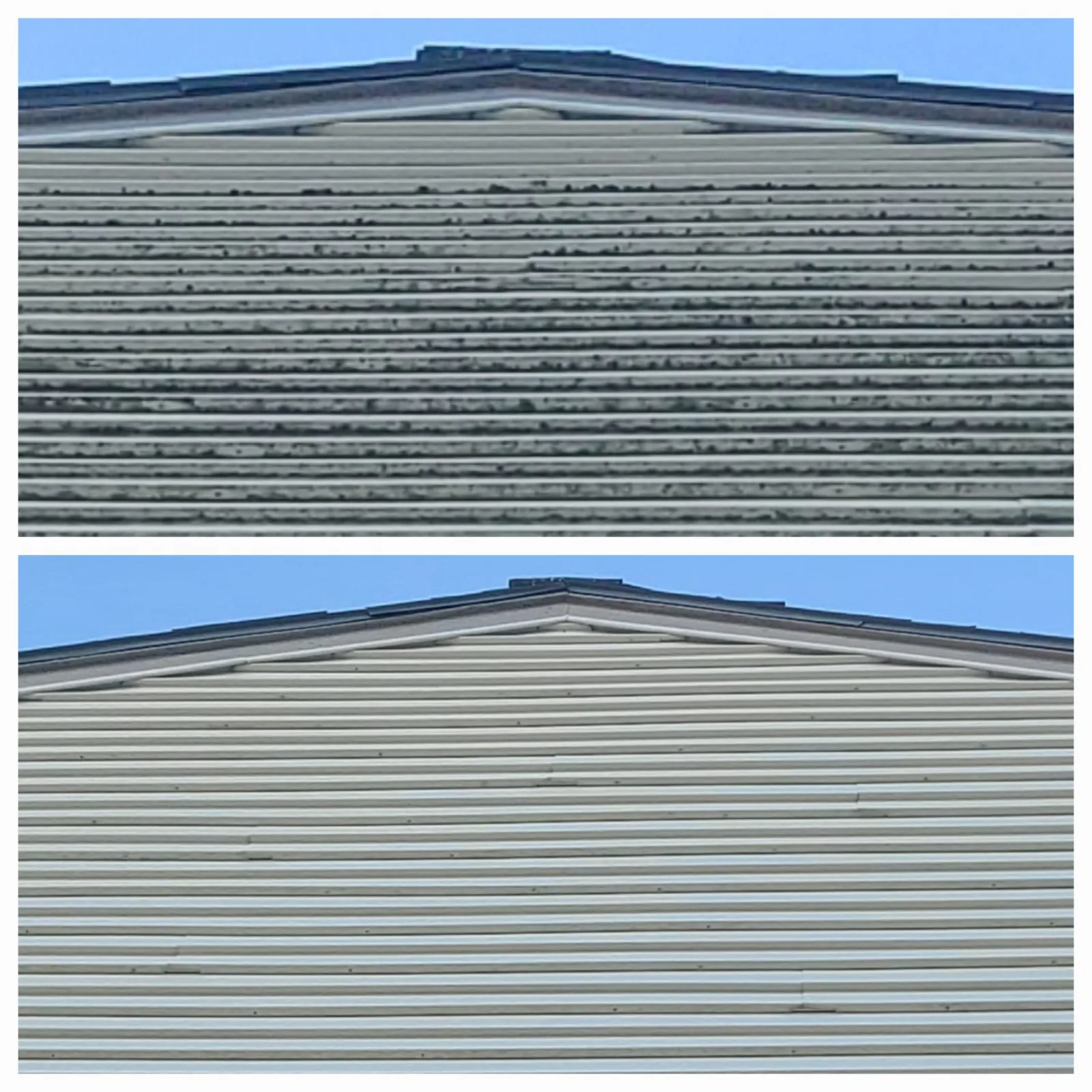
Vinyl goes through soft washing like every other cladding we handle, and what comes off it is usually algae and mildew rather than dirt. If you are not certain what your walls are, the siding page runs through each material side by side.
How We Wash Vinyl
Low pressure, the right chemistry, and a lot of attention to what is underneath the wall before anything gets applied.
Protect What Is Below
Plants, beds and anything adjacent are wetted down first so incidental overspray is diluted on contact instead of absorbed. This step is the difference between a clean house and a clean house with dead shrubs.
Apply Solution at Low Pressure
A correctly diluted cleaning solution is applied at a pressure comparable to a garden hose. The chemistry kills the algae and mildew; the water is only carrying it to the surface.
Work Top Down, With Dwell Time
The solution needs contact time to kill growth at the root rather than lighten it. We work the elevation methodically rather than chasing the worst patches.
Rinse Thoroughly, Including Below
Siding, trim, windows and the plantings underneath all get rinsed. Nothing is left to dry on the surface, which is what causes streaking.
What We Address on Vinyl
Vinyl collects a predictable set of problems in this climate.
Green Algae
Heaviest on north-facing and shaded elevations. Kills back with soft washing and stays gone for a season or two.
Black Streaking
Usually running below gutter joints and window sills, where dirty water concentrates and runs the same path repeatedly.
Chalky Oxidation
Loose surface chalk is removed. The underlying fading is a change in the material and will not fully reverse, which we say upfront.
Cobwebs & Nests
Under eaves, in corners and around light fixtures, where nothing weathers off naturally.
Moss at the Base
On the lowest courses where splash-back keeps the siding damp against a bed or a path.
Trim, Soffits & Windows
Cleaned as part of the wash, since those are the surfaces the eye actually lands on.
Frequently Asked Questions
Why can vinyl siding not be pressure washed?
Because of how it is built. Vinyl is hung in overlapping courses designed to shed water downward, and the panels are deliberately left free to expand and contract rather than being sealed. Water driven at high pressure from below or from the side goes straight up behind the course, into the wall cavity and the sheathing, where you will not see it until something has already gone wrong. High pressure also cracks older, brittle panels outright.
My siding leaves white chalk on my hand. What is that?
Oxidation. Sunlight gradually breaks down the surface of vinyl and leaves a fine chalky residue, worst on the elevations that take the most direct sun. Washing removes the loose chalk and the siding will look considerably better, but it is honest to say that oxidation is a change in the material itself rather than something sitting on it. Heavily oxidised siding cleans up well without going back to new.
Will the green growth on the north side come back?
Eventually, because the conditions that produced it have not changed. Soft washing kills the algae rather than knocking it off, so it stays away far longer than a rinse would, and most homes here are on a yearly or every-other-year cycle. Shaded, tree-covered north elevations run at the shorter end of that.
Is bleach safe on vinyl?
Correctly diluted and properly rinsed, the cleaning solutions used in soft washing are safe on vinyl and are the standard approach. The damage people cause at home comes from applying products neat, letting them dry on the surface in sun, and not pre-wetting the plants below. Those three mistakes account for most of the streaked siding and dead shrubs we get called out to look at.
Have a question we didn't answer? Call (425) 298-7041or submit a quote request — we respond within 24 hours.
House Washing Across Seattle & the Eastside
Vinyl dominates a particular slice of our service area. The suburban building boom across Renton, Lynnwood, Everett, Mill Creek and Bothell put a great deal of it up, and much of that siding is now old enough to be both oxidised and brittle, which changes how carefully it has to be handled. Newer Issaquah and Newcastle vinyl is in better condition but sits on tighter lots where overspray control matters more.
Choose your city for what we typically find on local vinyl.
Don't see your city? We work across the greater Seattle area, roughly an hour out from Kenmore. See the full service area, or call (425) 298-7041 and we'll tell you straight away whether you're in range.
Related Pages
Vinyl is one of several sidings we handle differently:
Get Your Vinyl Siding Soft Washed
Free, itemized quotes across Seattle, Bellevue, Kirkland, Redmond, Sammamish, Bothell, Kenmore, Woodinville, Lynnwood, Everett and the wider Eastside.
✓ Licensed & Insured✓ 5.0 ⭐ Google Rating✓ Free Quotes in 24hrs✓ 100% Satisfaction Guarantee